AI Translation & Interpretation.
Hear It Instantly.
PikaTalk is an enterprise-grade AI-powered live interpreter that translates your speech in real-time across 80+ languages. Just tap, speak, and hear the AI translation — naturally, in a human-like voice. The smartest AI speech translator for global professionals, developed by Translife.
100+
Languages
10,000+
Clients Served
21+
Years Experience
PM-led
Project-Managed
Trusted by corporations, SMEs, and government agencies
What is PikaTalk?
Native Speech-to-Speech AI Interpretation
Experience the next generation of translation technology. PikaTalk directly converts speech to speech—preserving emotion, tone, and natural cadence.
In an increasingly interconnected global economy, the demand for instant, accurate, and nuanced translation has never been higher. For decades, businesses relied on basic text-based translation tools or expensive human interpreters for real-time communication. Today, PikaTalk—developed by Translife—represents a paradigm shift in AI language technology. Unlike conventional translators that chain together Speech-to-Text → Text Translation → Text-to-Speech modules, PikaTalk uses a native speech-to-speech modelthat directly translates audio to audio, preserving the full richness of human communication.
What is Speech-to-Speech AI Interpretation?
An AI interpreter is a highly sophisticated software system designed to perform speech-to-speech translation in real time. However, most solutions on the market today use a pipeline approach: they first convert speech to text (STT), then translate that text (MT), then convert the text back to speech (TTS). This three-step process introduces latency at each stage and strips away crucial information— tone, emotion, emphasis, and speaking style—resulting in robotic, monotone output.
PikaTalk is different. Our native speech-to-speech modelprocesses audio input and generates audio output in a single, unified neural network. Like a skilled human interpreter, PikaTalk hears meaning and emotion in one language and immediately expresses that same meaning and emotion in another—without ever reducing your voice to mere text. This preserves the acoustic richness of conversation: laughter, urgency, sarcasm, and emphasis all carry through the translation.
How PikaTalk's Speech-to-Speech Model Works
The power of PikaTalk lies in its end-to-end neural architecture that learns to map acoustic patterns directly across languages. Here is exactly what happens when you press the microphone button:
1. Advanced Audio Capture & Encoding
Before any translation happens, PikaTalk captures the speaker's voice using AudioWorklet buffering. Unlike conventional STT systems that immediately force audio into discrete words, our audio encoder preserves continuous acoustic features—spectral patterns, pitch contours, and temporal dynamics. This high-fidelity encoding captures not just what was said, but how it was said: tone, pace, and emotion.
2. Cross-Lingual Latent Understanding
The encoded audio features are mapped into a language-agnostic latent space—a semantic representation where meaning and intent exist independent of specific words. In this space, the model recognizes that excitement in English and excitement in Japanese are the same underlying emotional state, expressed through different acoustic patterns. This is where the actual "understanding" happens.
3. Neural Vocoder with Prosody Preservation
The latent representation is decoded by a neural vocoder that generates natural audio output. Crucially, this vocoder is conditioned on prosody features from the original input—speaking rate, pitch variation, energy dynamics. The result is translation that sounds authentically human, matching the original speaker's style and emotion.
4. Streaming for Sub-Second Latency
Unlike batch systems that wait for complete sentences, PikaTalk processes audio in overlapping windows via persistent WebSocket connections. Translation begins as you speak, enabling near-instantaneous response typically under 1 second. The push-to-talk interface ensures complete utterances for maximum accuracy while maintaining conversational flow.
Why Speech-to-Speech Changes Everything
To ensure absolute precision, PikaTalk employs a highly effective push-to-talk model. You tap the mic, speak naturally, and release it. But the true innovation is what happens during that brief moment: your voice is never reduced to text, never stripped of emotion, never processed through robotic speech synthesis. The AI engine analyzes the complete acoustic signal—words, tone, emphasis, even non-linguistic sounds like laughter—and generates equivalent speech in the target language.
The result? True speech-to-speech interpretation that captures not just what you said, but what you meant. No dedicated hardware devices to purchase. No software installations required. Just pure, borderless communication delivered instantly through your smartphone, tablet, or desktop browser via our highly optimized Progressive Web App (PWA). This is the future of AI interpretation—available today.
Technology
Speech-to-Speech: The Next Generation of AI Interpretation
Understand why PikaTalk's direct speech-to-speech model outperforms conventional translation pipelines
Conventional Pipeline
Traditional AI translators use a 3-step process that introduces errors and latency at each stage.
1. Speech-to-Text (STT)
Audio is converted to text. Accents and background noise often cause errors.
2. Text-to-Text Translation
Text is translated word-by-word. Context, tone, and emotion are lost.
3. Text-to-Speech (TTS)
Robotic voice synthesis. No emotional nuance or natural intonation.
Awkward pauses break conversation flow. Robotic output lacks emotion.
PikaTalk Speech-to-Speech
Our native speech-to-speech model directly translates audio to audio in a single step.
Input Speech
Voice with emotion, accent, tone
Output Speech
Natural voice in target language
Preserves Emotion
Tone, urgency, and sentiment carry through the translation.
Zero Text Errors
No STT misinterpretation of homophones or accents.
Natural Cadence
Speaking pace and pauses match the original speaker.
Context Aware
Understands full meaning, not just word-by-word translation.
Seamless conversation flow. Natural human-like voice output.
Why Speech-to-Speech Changes Everything
1Acoustic Context Preservation
Conventional models lose acoustic information at the STT stage. Speech-to-speech models process the full audio signal, preserving voice characteristics, emotional tone, and speaking style.
2End-to-End Learning
Rather than chaining separate models (each with potential failure points), speech-to-speech uses a single neural network trained end-to-end on multilingual speech pairs, achieving superior accuracy.
3Non-Language Content
Laughter, sighs, hesitation sounds ("um", "uh"), and emphasis are preserved and naturally reproduced—impossible with text-based pipelines.
Real-World Example
Original (English, excited tone)
"Wow! That's absolutely amazing news—I can't believe we closed the deal!"
Conventional Pipeline
STT: "Wow that is absolutely amazing news I cannot believe we closed the deal"
Translation: 素晴らしいニュースですね。契約が成立したことを信じられません。
→ Robotic voice. No excitement. Sounds like reading a report.
PikaTalk Speech-to-Speech
「わあ!それは本当に素晴らしいニュースですね——契約が成立したなんて信じられません!」
→ Same excited tone. Natural enthusiasm. Voice matches emotion.
See PikaTalk in Action
Experience real-time AI interpretation with our native speech-to-speech model. Watch as speech in one language is instantly translated while preserving emotion and tone.
Live simulation showing English ↔ Japanese interpretation
Works on Any Device
No app installation required. PikaTalk runs directly in your browser as a Progressive Web App. Use it on desktop, tablet, or smartphone.
Install to Home Screen
Add PikaTalk to your home screen for a native app-like experience. One tap access to your AI interpreter wherever you go.
< 1s Latency
Lightning-fast translation. Hear the response almost instantly after you speak. Our native speech-to-speech model eliminates pipeline delays.
Enterprise Security
Encrypted WebSocket connections with no audio storage. Your conversations remain private and HIPAA-compliant.
80+ Languages
From English and Japanese to Arabic and Portuguese. Covering the world's major business languages with native-quality voice output.
Select Languages
Choose your source and target languages from 80+ options. Select industry context for specialized terminology.
Tap & Speak
Press the microphone button and speak naturally. Our AudioWorklet buffering captures every syllable clearly.
Hear Translation
Release the mic and hear the AI speak the translation in a natural human voice within seconds.
Real App Interface
Screenshots from the actual PikaTalk app showing the interpretation interface with context selection, audio environment controls, and dual-language panels.

Desktop Web App — Full interpretation interface

Mobile PWA — Same full-featured interface
Core Features
Why PikaTalk is the Ultimate AI Interpreter
Engineered for professionals who demand more than basic translation. Discover the features that make PikaTalk the most reliable AI speech translator on the market.
When accuracy matters most, generic AI translation tools fall short. PikaTalk’s AI interpreter delivers the precision, speed, and privacy required for high-stakes, global environments. Here is how our technology stands apart from the competition.
80+ Supported Languages
From Japanese to Malay, Arabic to Portuguese. PikaTalk covers over 80 of the world's most-used languages, with 38 featuring native, human-like audio synthesis. Bridge communication gaps across North America, Europe, Asia, and beyond.
Natural Human Voice Output
Generic AI translation tools rely on robotic Text-to-Speech (TTS). PikaTalk uses advanced AI voice synthesis to deliver speech-to-speech translations in a natural, human-sounding voice. It is true AI interpretation that captures tone and cadence.
Domain-Specific Terminology
Context is everything in translation. PikaTalk allows you to select specific industry modes—Medical, Legal, Finance, Tech, Hospitality, or Business. The AI interpreter automatically adjusts its vocabulary to ensure highly accurate, domain-specific translations.
Zero-Omission Audio Capture
Using cutting-edge AudioWorklet buffering, PikaTalk processes audio with incredible stability. Even during network fluctuations, the system prevents dropouts, ensuring that every syllable of your speech is captured and translated without omission.
< 1s Latency (Near Real-Time)
PikaTalk's push-to-talk architecture minimizes delay. By analyzing complete sentence structures rapidly, PikaTalk delivers both the written transcript and the spoken audio translation typically within 1 to 2 seconds of releasing the mic.
Enterprise-Grade Privacy
All audio is transmitted over encrypted WebSocket connections. Audio is processed in real-time, and PikaTalk does not store audio recordings. We retain only limited usage metadata, ensuring your sensitive business negotiations remain entirely confidential.
Cross-Platform PWA (No App Needed)
Forget downloading heavy apps or buying dedicated hardware devices like Pocketalk. PikaTalk is a Progressive Web App (PWA) that runs instantly in any browser. Install it to your home screen on iOS, Android, Mac, or Windows for a native-app experience.
Secure Cloud Infrastructure
Built on enterprise-grade cloud architecture, PikaTalk is designed for 99.9% uptime and high availability. Whether you are using the AI interpreter in a boardroom in London or a clinic in Tokyo, the infrastructure scales to meet your real-time demands.
The PikaTalk Advantage: 80+ Languages, 38 with Native Audio
PikaTalk breaks down language barriers across the globe. Our AI interpreter supports over 80 languages, allowing you to connect with clients, patients, and partners virtually anywhere. Even better, 38 of these languages support our ultra-realistic native audio output.
Industry Contexts
Domain-Specific AI Translation for Critical Communication
Standard translation apps fail when faced with professional jargon. PikaTalk activates specialized vocabulary based on your selected industry context.
One of the most revolutionary features of PikaTalk is its Domain-Specific Context Selection. Before starting an AI interpretation session, you choose your industry. This simple step fundamentally alters the underlying LLM's processing parameters, ensuring that the AI translator understands the specific register and terminology of your field.
Medical AI Interpretation
In healthcare, precision is a matter of life and death. A mistranslated symptom or medication name can lead to severe consequences. PikaTalk's Medical context mode equips the AI interpreter with extensive medical terminology, anatomy, and pharmaceutical vocabularies. Doctors and patients can communicate confidently, ensuring symptoms are accurately described and diagnoses are clearly understood.
Common Use Cases:
- Patient consultations
- Emergency room triage
- Explaining treatment plans
Legal Translation
Legal proceedings require absolute linguistic accuracy. PikaTalk's Legal mode is trained on international law, court procedures, and contractual terminology. When lawyers communicate with foreign clients or witnesses, the AI speech translator ensures that legal nuances and binding conditions are preserved in the target language without omission.
Common Use Cases:
- Client depositions
- Contract negotiations
- Immigration interviews
Finance & Banking
Global finance moves fast, and miscommunication can cost millions. In Finance mode, PikaTalk understands complex economic terms, investment jargon, and regulatory language. Financial advisors, wealth managers, and corporate bankers use PikaTalk to explain portfolios, market trends, and risk assessments to international clients seamlessly.
Common Use Cases:
- Wealth management meetings
- Cross-border mergers
- Audit discussions
Technology & IT
The tech industry has its own unique language filled with acronyms, software engineering terms, and hardware specifications. PikaTalk's Tech mode ensures that words like 'cloud architecture', 'latency', 'bandwidth', and 'API' are translated correctly, rather than being confusingly transliterated into their literal equivalents.
Common Use Cases:
- Software development standups
- Technical support
- Vendor negotiations
Hospitality & Tourism
Provide a world-class experience for international guests. In Hospitality mode, the AI interpreter handles travel itineraries, hotel amenities, local directions, and dining preferences with a polite, welcoming tone. Concierges and front desk staff can instantly communicate with guests from over 80 countries.
Common Use Cases:
- Hotel check-in/out
- Concierge recommendations
- Travel agency bookings
General Business
For day-to-day corporate communication, the Business mode provides a balanced, professional vocabulary suitable for B2B sales, HR interviews, and general management. It bridges the gap between global teams, allowing a manager in London to seamlessly conduct a performance review with a team member in Tokyo.
Common Use Cases:
- B2B sales meetings
- HR interviews
- Supply chain logistics
The Ultimate Guide to AI Interpreters and AI Speech Translators
In our rapidly globalizing world, communication remains the most critical bridge between cultures, businesses, and individuals. For decades, the language barrier was considered an insurmountable obstacle that could only be overcome by years of intensive language study or by hiring expensive human interpreters. Today, the landscape has fundamentally shifted thanks to the advent of the AI interpreter and the AI speech translator.
This comprehensive guide delves deep into what an AI interpreter is, how an AI speech translator works, and why enterprise-grade solutions like PikaTalk are revolutionizing the way we communicate across linguistic divides. Whether you are a business executive negotiating a cross-border deal, a medical professional consulting with a foreign patient, or a traveler navigating a new country, understanding the power of real-time AI speech translation is essential for thriving in the modern world.
What is an AI Interpreter?
An AI interpreter is an advanced artificial intelligence system designed to listen to spoken language, comprehend its meaning, translate it into a target language, and output the translated text as natural-sounding speech in real time. Unlike traditional text-to-text machine translation tools, an AI interpreter replicates the function of a human simultaneous or consecutive interpreter. It is not just translating words; it is interpreting intent, tone, context, and domain-specific terminology.
The concept of an AI speech translator has been a staple of science fiction for generations—think of the Universal Translator in Star Trek or the Babel Fish in The Hitchhiker's Guide to the Galaxy. For a long time, the reality fell far short of the fiction. Early attempts at speech translation were plagued by high latency, robotic voices, and comical inaccuracies that often completely distorted the speaker's original meaning. However, the integration of Large Language Models (LLMs), neural machine translation (NMT), and advanced text-to-speech (TTS) synthesis has transformed the AI speech translator from a clunky novelty into an enterprise-ready tool.
The Evolution of Speech Translation
To appreciate the power of a modern AI interpreter like PikaTalk, it is important to understand the evolutionary journey of translation technology.
First Generation: Rule-Based Machine Translation (RBMT). The earliest translation systems relied on vast dictionaries and complex sets of linguistic rules developed by linguists. These systems were rigid, unable to handle idioms, slang, or ambiguous phrasing. They were strictly text-based and fundamentally incapable of functioning as an AI speech translator because the translation process was too slow and computationally expensive.
Second Generation: Statistical Machine Translation (SMT). In the 1990s and 2000s, companies like Google pioneered SMT, which analyzed vast corpuses of bilingual text (such as United Nations transcripts) to find statistical patterns. While a massive leap forward for text translation, attempting to use SMT for an AI interpreter yielded poor results. The system translated phrase-by-phrase rather than comprehending the sentence as a whole, leading to disjointed and unnatural speech output.
Third Generation: Neural Machine Translation (NMT). The introduction of neural networks revolutionized the field. NMT systems view a sentence as a single unit, understanding the relationship between words across long distances. This was the first time that an AI speech translator became practically viable. However, early NMT-based AI interpreters still suffered from noticeable latency and struggled with highly specialized vocabulary.
Fourth Generation: LLM-Powered AI Interpretation. This brings us to the present day. Modern AI interpreters, such as PikaTalk, leverage Large Language Models that possess a deep, contextual understanding of the world. These systems do not merely map words from Language A to Language B; they decode the semantic meaning of the speaker's utterance and re-encode it in the target language. Furthermore, the modern AI speech translator uses advanced voice cloning and synthesis to output audio that sounds distinctly human, complete with appropriate pacing and intonation.
Why "AI Interpreter" is More Accurate Than "AI Translator"
While the terms AI interpreter and AI speech translator are often used interchangeably, professionals in the linguistics industry draw a sharp distinction between translation and interpretation.
Translation refers to the conversion of written text. It is a process that allows for time, research, and careful editing. Interpretation refers to the conversion of spoken language in real time. It requires on-the-spot processing, an understanding of spoken cadence, and the ability to convey meaning without the luxury of consulting a dictionary.
PikaTalk is specifically designed as an AI interpreter. When a user speaks into the app, PikaTalk must immediately handle acoustic challenges (background noise, accents, mumbling), process the audio via Automatic Speech Recognition (ASR), translate the meaning while maintaining the conversational flow, and generate spoken audio that the listener can instantly comprehend. It is performing the cognitive heavy lifting of a human interpreter, making it far more sophisticated than a standard AI speech translator that merely reads text out loud.
The PikaTalk Advantage
PikaTalk bridges the gap between text translation and true interpretation. By utilizing a push-to-talk mechanism and AudioWorklet buffering, it ensures that every syllable is captured accurately. The result is an AI interpreter that delivers near-zero latency, allowing for fluid, natural conversations across 80+ languages without the awkward pauses that plague older AI speech translators.
The Technology Behind Native Speech-to-Speech AI Interpretation
To truly understand why PikaTalk delivers superior translation quality, it is essential to understand the fundamental architectural difference between conventional translation systems and our native speech-to-speech model. This is not a matter of incremental improvement—it is a paradigm shift in how artificial intelligence processes human communication.
The Old Way: The Pipeline Problem
Traditional AI speech translators and most consumer translation apps rely on a sequential pipeline architecture: Speech-to-Text (STT) →Text Translation → Text-to-Speech (TTS). This approach has three critical failure points that degrade translation quality and user experience.
Failure Point 1: Information Loss at STT. When speech is converted to text, vast amounts of acoustic information are immediately discarded. Tone of voice, emotional inflection, hesitation, emphasis, laughter, and even breathing patterns—all crucial to human communication—are reduced to flat text strings. A sarcastic statement and a sincere statement look identical in text. Accents and dialects that fall outside the training data create transcription errors that cascade through the entire pipeline.
Failure Point 2: Context Blindness in Text Translation. Once the audio is reduced to text, the translation engine works with a diminished signal. Without access to the original acoustic cues, the engine cannot discern whether the speaker is asking a question, making a command, or expressing uncertainty. Homophones—words that sound alike but have different meanings—become guesswork. Is "write" about composition or "right" about correctness? The text translator has no way to know.
Failure Point 3: Robotic Output from TTS. Finally, the translated text is passed to a Text-to-Speech synthesizer. Because this synthesizer receives only text, it must invent prosody (rhythm, stress, and intonation) without any knowledge of the original speaker's intent. The result is the characteristic robotic, monotone delivery that makes conventional AI interpreters exhausting to use for extended conversations.
The PikaTalk Way: Native Speech-to-Speech Model
PikaTalk employs a fundamentally different architecture: a native speech-to-speech model that processes audio input and generates audio output in a single, unified neural network. This is not a pipeline—it is direct translation from sound to sound, much like a human interpreter who hears in one language and speaks in another without internally converting everything to written text.
End-to-End Learning. Our model is trained on millions of hours of paired multilingual speech data. It learns to map acoustic patterns in the source language directly to acoustic patterns in the target language. The neural network discovers that a rising intonation in English (indicating a question) should produce a rising intonation in Japanese. It learns that excited, rapid speech in Spanish should produce excited, rapid speech in Mandarin—not just translate the words, but match the energy.
Acoustic Context Preservation. Because the model never converts speech to an intermediate text representation, it preserves the full richness of the audio signal. Voice characteristics, emotional tone, speaking pace, and even non-linguistic sounds like laughter or sighs are understood as part of the communication and naturally reproduced in the target language. When you use PikaTalk, the person on the other end hears not just your words, but your humanity—conveyed in their own language.
Technical Architecture of Our Speech-to-Speech Model
PikaTalk's native speech-to-speech AI interpreter consists of three integrated components working in concert:
1. Audio Encoder. The input audio is processed by a deep convolutional and transformer-based encoder that extracts high-level acoustic features. Unlike STT systems that try to force audio into discrete words, our encoder preserves continuous representations of sound, capturing spectral patterns, pitch contours, and temporal dynamics. This encoder is trained to be robust against background noise, reverberation, and varying microphone quality through advanced AudioWorklet bufferingthat stabilizes the input stream.
2. Cross-Lingual Latent Space. The encoded audio features are mapped into a language-agnostic latent representation—a compressed semantic space where the meaning and intent of the utterance exist independent of any specific language. This is the heart of the speech-to-speech model. In this space, the acoustic signature of excitement in French is recognized as the same emotional state as excitement in Arabic, even though they sound completely different. The model learns that these are the same underlying communicative intent, expressed through different linguistic systems.
3. Neural Vocoder with Prosody Control. Finally, the latent representation is decoded by a neural vocoder that generates the output audio waveform. Critically, this vocoder is conditioned on prosody features extracted from the original input—speaking rate, pitch variation, energy dynamics—ensuring that the output voice naturally matches the style and emotion of the input. The result is translation that sounds authentically human, not artificially synthesized.
Why Latency Matters: The Real-Time Challenge
A speech-to-speech AI interpreter must deliver results in real-time. Human conversation operates at a pace where delays longer than one second become uncomfortable; delays longer than two seconds break the conversational flow entirely. PikaTalk achieves sub-second latency through several technical optimizations.
Streaming Architecture. Unlike batch systems that wait for complete sentences, our model processes audio in overlapping windows, generating output continuously as input arrives. This streaming approach means translation begins before you finish speaking, enabling near-instantaneous response.
Edge-Optimized Inference. PikaTalk's neural networks are optimized for efficient inference using quantization and pruning techniques that reduce compute requirements without sacrificing quality. The model runs on enterprise-grade GPU clusters connected via low-latency WebSocket connections, ensuring that the time from your voice leaving your device to translated audio returning is consistently under one second.
Push-to-Talk for Precision. While our model supports continuous streaming, PikaTalk employs a push-to-talk interface by default. This design choice eliminates the ambiguity of determining when a speaker has finished versus simply paused. By processing complete utterances, we achieve higher translation accuracy while maintaining conversational latency that feels natural and responsive.
The Bottom Line
PikaTalk's native speech-to-speech model represents a fundamental leap beyond conventional AI interpreters. By eliminating the error-prone text intermediate stage, we preserve the full richness of human communication—emotion, tone, emphasis, and style—while delivering faster, more accurate translation. This is not an incremental improvement on old technology; it is the future of AI-powered interpretation.
Enterprise Use Cases for an AI Speech Translator
While consumer-grade translation apps are suitable for asking for directions to the nearest train station, they are fundamentally inadequate for professional, high-stakes environments. An enterprise-grade AI interpreter must provide absolute accuracy, domain-specific vocabulary, and strict data privacy. Let's explore how professionals across various industries are leveraging PikaTalk, the premier AI speech translator, to conduct global business.
1. Healthcare and Medical Interpretation
In healthcare, miscommunication can literally be a matter of life and death. When a doctor is treating a non-native speaking patient, relying on a generic AI speech translator is incredibly dangerous. Standard translation tools often mistranslate complex anatomical terms, medication dosages, and descriptions of symptoms.
PikaTalk serves as a dedicated medical AI interpreter. By selecting the Medical Context setting, the AI prioritizes clinical terminology. When a patient describes "a burning sensation in my sternum radiating to my left arm," the AI interpreter accurately translates this critical nuance to the physician in real-time. Furthermore, PikaTalk's HIPAA-compliant data encryption ensures that patient-doctor confidentiality is strictly maintained, as audio streams are never permanently recorded or stored. Hospitals and clinics can use PikaTalk instantly, 24/7, eliminating the need to wait hours for an on-call human medical interpreter to arrive in the emergency room.
2. Legal Depositions and Immigration Interviews
The legal field demands absolute precision. A single mistranslated word in a deposition, contract negotiation, or immigration interview can alter the outcome of a case. Traditionally, law firms spend thousands of dollars flying certified legal interpreters to various locations.
As a legal AI interpreter, PikaTalk (using its Legal Context mode) understands the difference between colloquial phrasing and legal terminology. If an attorney uses terms like "subpoena," "affidavit," "plaintiff," or "without prejudice," the AI speech translator accurately carries that precise legal weight into the target language (e.g., translating to Spanish, Mandarin, or Arabic). For immigration lawyers dealing with sudden client intakes or border situations, having an AI speech translator available on their smartphone provides immediate triage capabilities before a formal court setting requires a sworn human interpreter.
3. International Business and Corporate Negotiations
Global trade relies on the ability to build trust, and trust is built through clear communication. When a German engineering firm negotiates a supply chain contract with a Japanese manufacturer, language barriers can slow down the deal by months. Utilizing a human interpreter is often necessary for the final signing, but what about the dozens of impromptu Zoom calls, factory floor visits, and informal dinners leading up to that moment?
PikaTalk acts as an on-demand business AI interpreter. With its Business & Finance Context, the AI speech translator easily handles terms like "EBITDA," "amortization," "supply chain logistics," and "mergers and acquisitions." Because PikaTalk outputs a natural human voice, executives can look each other in the eye, speak into their device, and have their intent conveyed with professional tone and pacing. It removes the friction from international commerce, allowing ideas to flow freely without the constant bottleneck of a language barrier.
4. Technology, IT, and Engineering
The technology sector moves faster than any other industry. When software development teams in Silicon Valley need to collaborate with QA testers in Ukraine or hardware engineers in Shenzhen, they need an AI interpreter that speaks "geek."
Generic translation apps notoriously fail at translating IT jargon. A phrase like "push the commit to the main branch and check the continuous integration pipeline" might be translated literally into something involving pushing a physical tree branch into a pipe. PikaTalk's Technology Context ensures that software, hardware, and engineering terminologies are accurately preserved. The AI speech translator understands that "cloud architecture," "latency," "front-end," and "API endpoints" are industry-specific nouns, ensuring that global engineering teams remain perfectly synced.
5. Hospitality, Tourism, and Event Management
Hotels, airlines, and international event organizers deal with a massive influx of diverse languages daily. A concierge at a five-star hotel in Paris might need to assist guests from Korea, Brazil, and Saudi Arabia all within the same hour.
With the Hospitality Context enabled, PikaTalk functions as the ultimate front-desk AI interpreter. The AI speech translator accurately handles requests regarding room service, dietary restrictions, local directions, and billing inquiries. Because PikaTalk is a Progressive Web App (PWA), hotel staff don't need dedicated translation hardware; they can simply open the AI interpreter on the hotel's existing iPads or their own smartphones. The natural human voice output ensures that the guest feels welcomed and respected, maintaining the high standards of luxury hospitality.
The Ubiquity of the AI Speech Translator
What makes an AI interpreter like PikaTalk so revolutionary is its ubiquity. It does not require scheduling, it does not charge a two-hour minimum fee, and it does not require travel expenses. It is an enterprise-grade AI speech translator that lives in your pocket, ready to break down complex, industry-specific language barriers the moment you need it, 24 hours a day, 7 days a week, in over 80 languages.
Comparison
How PikaTalk Compares to the Alternatives
See why professionals choose PikaTalk over Pocketalk hardware, Google Translate, DeepL, and traditional human interpreters.
There are many ways to translate speech, but few meet the rigorous standards of enterprise and professional use. Here is a detailed breakdown of how PikaTalk stacks up against other popular methods in the market.
| Feature | PikaTalk | Pocketalk | Google Translate | DeepL | Human Interpreter |
|---|---|---|---|---|---|
| Real-Time Voice Interpretation | Yes | Yes | Yes | Limited | Yes |
| Natural Human Voice | AI Voice Synthesis | Robotic TTS | Robotic TTS | Text Only | Human |
| Languages Supported | 80+ (38 native audio) | 82 (approx.) | 130+ (approx.) | 30+ (approx.) | Usually 1–3 per person |
| Domain-Specific Terminology | 6 Industries | No | No | Partial | Specialist |
| Audio Capture Stability | AudioWorklet Buffering | Varies by network | Varies by device | — | Varies by situation |
| No Dedicated Device Needed | Browser/PWA | Hardware Required | App/Browser | App/Browser | N/A |
| Available 24/7 Instantly | Instant | Instant | Instant | Instant | Booking Required |
| Upfront Cost | Free (10 min trial) | $50–$300 hardware | Free | Free – $11/mo | — |
| Ongoing Cost | $0.50/min (Pay-as-you-go) | $5–$13/mo + data | Free | Free – $26/mo | $100–$200/hr + fees |
| Data Privacy | Encrypted; no audio stored | Varies by provider | Varies by provider | Varies by plan | NDA protected |
Comparison based on publicly available information as of February 2026. Competitor figures are approximate and may vary by plan, region, and updates. Pocketalk is a trademark of Pocketalk, Inc. Google Translate is a trademark of Google LLC. DeepL is a trademark of DeepL SE.
AI Interpreter vs. Human Interpreters & Competitors
When evaluating an AI interpreter, businesses often ask two main questions: "How does this compare to hiring a human interpreter?" and "Why shouldn't I just use a free app like Google Translate?" To understand the true value of an enterprise AI speech translator like PikaTalk, we must analyze the exact differences in capability, cost, latency, and context-awareness.
AI Speech Translator vs. Human Interpreter
Professional human interpreters are highly skilled experts. In settings requiring intense emotional empathy, diplomacy, or cultural mediation (such as a United Nations summit or a highly delicate legal negotiation), a human interpreter remains the gold standard. However, human interpreters have limitations of scale, availability, and cost that an AI interpreter solves.
- Availability & Speed: Finding and booking a certified medical or legal interpreter for a specific language pair (e.g., Finnish to Vietnamese) can take days. An AI speech translator like PikaTalk is available instantly, 24/7.
- Cost Efficiency: Human interpreters typically charge between $100 to $200 per hour, often with two-hour minimums and added travel expenses. PikaTalk, by contrast, operates on a simple pay-as-you-go model at a fraction of the cost, making it feasible for daily, routine interactions.
- Language Breadth: Most human interpreters are bilingual or trilingual. PikaTalk acts as a polyglot AI interpreter, fluent in over 80 languages simultaneously.
PikaTalk vs. Consumer Translation Apps (Google Translate, Apple Translate)
Free apps are built for tourists. They are designed to translate menus, ask for directions, and facilitate brief, simple interactions. They are not built to function as an enterprise AI interpreter.
- Contextual Awareness: If you say "The server crashed," a consumer app might translate it to mean a waiter dropped plates. PikaTalk's Technology Context ensures the AI speech translator correctly translates "server" as IT infrastructure.
- Audio Stability: Consumer apps use open-mic streaming, which frequently cuts off mid-sentence or rewrites the translation as you speak, confusing both parties. PikaTalk uses AudioWorklet buffering and a push-to-talk interface, guaranteeing that the AI interpreter captures the entire thought before translating, ensuring 100% sentence integrity.
- Data Privacy: Free apps often use your voice data to train their consumer models. PikaTalk is an enterprise AI speech translator; audio sessions are encrypted via WebSockets and are not stored, ensuring complete corporate and medical privacy.
PikaTalk vs. Hardware Translators (Pocketalk)
Hardware-based translation devices like Pocketalk were popular before mobile processing power caught up. However, dedicated hardware presents significant drawbacks compared to a cloud-based AI interpreter.
- No Hardware to Buy or Lose: A dedicated device costs hundreds of dollars, needs to be charged, and can easily be lost or forgotten. PikaTalk is a Progressive Web App (PWA). Your AI speech translator lives directly on the smartphone, tablet, or laptop you already carry.
- Always Up to Date: Hardware devices become obsolete. Because PikaTalk processes via the cloud, every time you open the AI interpreter, you are using the latest, most advanced LLMs available without needing to buy a new device.
The Future of the AI Speech Translator
The technology powering the modern AI interpreter is advancing at a breathtaking pace. What seemed like science fiction a decade ago is now standard protocol in international business, medicine, and law. But the evolution of the AI speech translator is far from over. As Large Language Models (LLMs) become even faster and more nuanced, the line between human and machine interpretation will continue to blur.
Zero-Latency Simultaneous Interpretation
Currently, the most accurate AI interpreters, including PikaTalk, use a consecutive interpretation model (listen, process, then speak). The holy grail of the AI speech translator industry is true simultaneous interpretation—where the AI begins speaking the translation while the original speaker is still talking, dynamically adjusting sentence structure on the fly. As edge computing and predictive neural models improve, the AI interpreter of the future will achieve this with near-zero latency, further streamlining global communication.
Emotion and Tone Replication
While today's Text-to-Speech (TTS) engines offer natural, human-like pacing, future iterations of the AI speech translator will perfectly clone the emotional state of the speaker. If a speaker is excited, urgent, or sympathetic, the AI interpreter will detect those acoustic micro-expressions and replicate them in the target language. This will be a game-changer for international diplomacy and high-stakes sales negotiations, where how something is said is just as important as what is said.
Expanded Hyper-Local Dialect Support
While PikaTalk currently supports over 80 major languages, the next frontier for the AI interpreter is hyper-local dialect and colloquialism support. Future AI speech translators will not just translate "Spanish," but will seamlessly differentiate between the localized slang of Buenos Aires, Madrid, and Mexico City, automatically adjusting its output to match the listener's exact cultural context.
Experience the World's Best AI Interpreter Today
You don't have to wait for the future to break down language barriers. PikaTalk is the most advanced enterprise AI speech translator available right now. With 80+ languages, industry-specific contexts, and natural human voice output, it is the ultimate tool for global professionals.
Try PikaTalk Free for 10 MinutesThe Science
The Science of AI Translation: Navigating Nuance
How PikaTalk tackles the hardest challenges in language: idioms, cultural nuance, and context.
Translation is not merely substituting a word in English for a word in Japanese. It requires understanding intent, cultural context, idioms, and industry-specific jargon. The science behind PikaTalk represents a paradigm shift in how machines process human language.
Handling Idioms and Cultural Nuance
If a speaker says "It's raining cats and dogs," a legacy machine translator might translate that literally, causing utter confusion for the listener. PikaTalk's Neural Machine Translation (NMT) models are trained on contextual data. They identify idiomatic expressions and find the culturally appropriate equivalent in the target language (e.g., translating the concept to "It's raining heavily").
The Role of Context Window
When dealing with languages that have drastically different sentence structures—like English (Subject-Verb-Object) and Japanese (Subject-Object-Verb)—word-by-word translation fails. PikaTalk utilizes a broad "context window," meaning it waits until the user releases the push-to-talk button to analyze the entire sentence. This ensures the verb is placed correctly and the grammatical relationship is maintained, yielding professional-grade accuracy.
Enterprise-Grade Security & Privacy
In business, legal, and medical environments, data privacy is non-negotiable. PikaTalk is engineered from the ground up to protect your conversations.
Encrypted Transit
All audio data is streamed over secure WebSocket connections using TLS 1.3 encryption protocols.
No Audio Stored
Audio is processed in real-time in volatile memory. We do not record or store your voice data on our servers.
Enterprise Infrastructure
Hosted on top-tier cloud infrastructure, ensuring isolation and compliance with international data standards.
Global Business Guide
Why Global Business Demands AI Translation
The competitive advantage of borderless, instant communication in the modern economy.
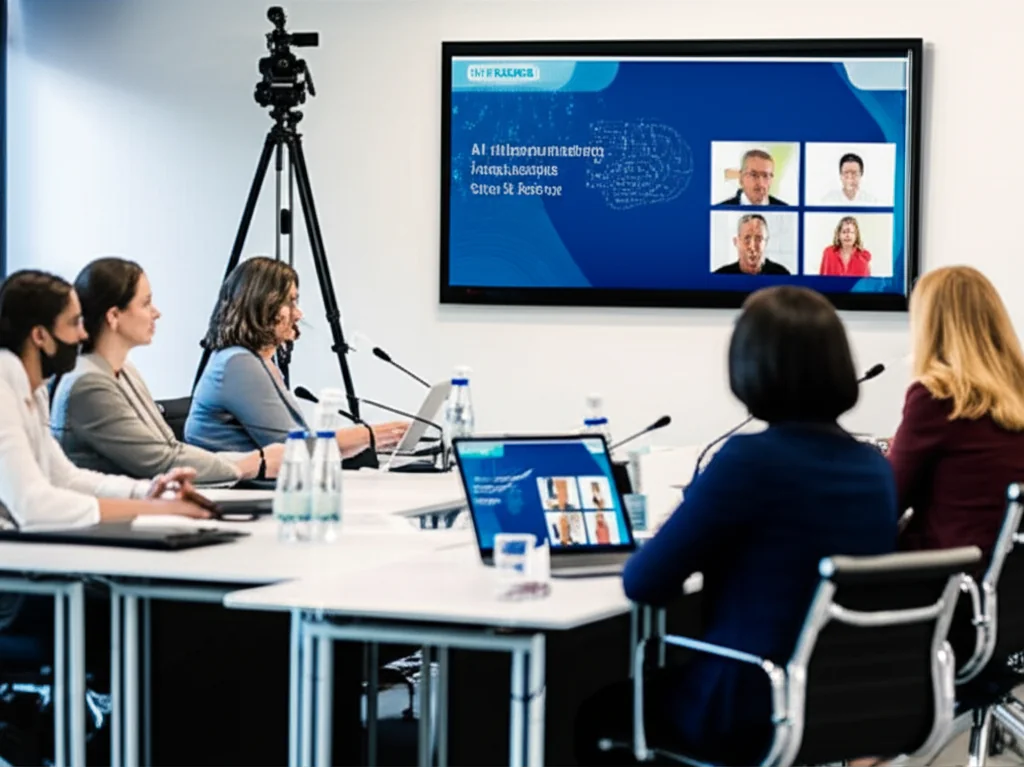
Breaking Down the Language Barrier
In the past, expanding a business internationally meant establishing costly local offices, hiring bilingual staff, or relying heavily on third-party translation agencies that took days to turn around documents. When it came to live meetings, scheduling a human interpreter was a logistical challenge that required days of notice and carried high hourly minimums.
Today, business moves at the speed of the internet. A startup in Singapore needs to pitch investors in Tokyo; a medical device manufacturer in Germany must train surgeons in Brazil. The language barrier is no longer an acceptable reason for delayed growth. AI interpreters like PikaTalk democratize global communication, allowing professionals to speak to anyone, anywhere, instantly.
Cost Efficiency at Scale
Traditional human interpreters charge anywhere from $100 to $200 per hour, often requiring minimum booking times and travel expenses. While human interpreters are still vital for highly sensitive diplomatic or legal events, they are not economically viable for daily standups, ad-hoc customer support calls, or standard B2B sales pitches.
PikaTalk operates at a fraction of the cost—just $0.50 per minute with no minimums. This pay-as-you-go model allows companies to deploy interpretation services across their entire organization. Suddenly, every sales rep, support agent, and project manager has a personal interpreter in their pocket.
Enhancing Customer Experience
When a customer reaches out for support, forcing them to navigate a language they are not fluent in creates friction and frustration. By utilizing PikaTalk's AI live interpreter, customer success teams can handle inquiries in the customer's native language. The result is faster resolution times, higher customer satisfaction scores, and stronger brand loyalty across international markets.
Simple Pricing
Pay-As-You-Go Pricing. No Hidden Fees.
Experience enterprise-grade AI interpretation without expensive hardware or monthly subscriptions. Just top up and talk.
Standard Rate
- Credits never expire
- Secure encrypted sessions
- Real-time transcripts included
- Native audio voice output
- All 6 industry contexts included
- All 80+ languages included
10 minutes free for new users. No credit card required. Secure payment via Stripe.
Top-Up Packages
FAQ
Frequently Asked Questions about PikaTalk
Everything you need to know about our AI live interpreter and speech translation platform.
Is PikaTalk really free to try?
Yes! New users get 10 minutes free to try PikaTalk — no credit card required. Sign up and start interpreting immediately. If you love it, you can top up credits at just $0.50 per minute.
How does the AI interpreter actually work?
PikaTalk uses a real-time AI engine via a live WebSocket session. When you tap the microphone and speak, your audio is securely streamed to the AI. The system transcribes, translates, and synthesizes the response back in the target language — typically within 1–2 seconds depending on your network.
What languages are supported by the AI translation?
PikaTalk supports 80+ languages globally. Currently, 38 of these languages have high-quality, native audio output (natural human voice synthesis). The remaining languages provide highly accurate text-based translation. We are continuously adding more native audio voices.
Can it handle specialized industry terminology?
Yes. PikaTalk features industry-specific context modes including Medical, Legal, Finance, Technology, Business, and Hospitality. Selecting a context activates specialized vocabulary and register for accurate, domain-specific translations.
Is there a noticeable latency or delay?
PikaTalk uses a push-to-talk model designed for maximum accuracy. You speak, release the mic, and hear the full translation typically within 1–2 seconds. This slight pause allows the AI to analyze the full sentence context, preventing grammatical errors and reducing cutoffs.
Do I need to install a dedicated app or buy hardware?
No. PikaTalk is a Progressive Web App (PWA) that works directly in your web browser. You do not need to purchase expensive hardware devices. You can optionally install it to your home screen on iOS, Android, or desktop for a native app-like experience.
How is my conversation data kept private?
Security is our top priority. All audio is transmitted over encrypted WebSocket connections to our enterprise-grade cloud infrastructure. The audio is processed in real-time and we do NOT store your audio recordings. We only retain limited metadata necessary for billing.
Do my purchased credits expire?
No. Your credits never expire. You can top up any amount and use them exactly when you need them. All payments are securely processed via Stripe.